
MoveWell Med · September 2026
Balance Exercises for Seniors: Reducing Fall Risk at Home
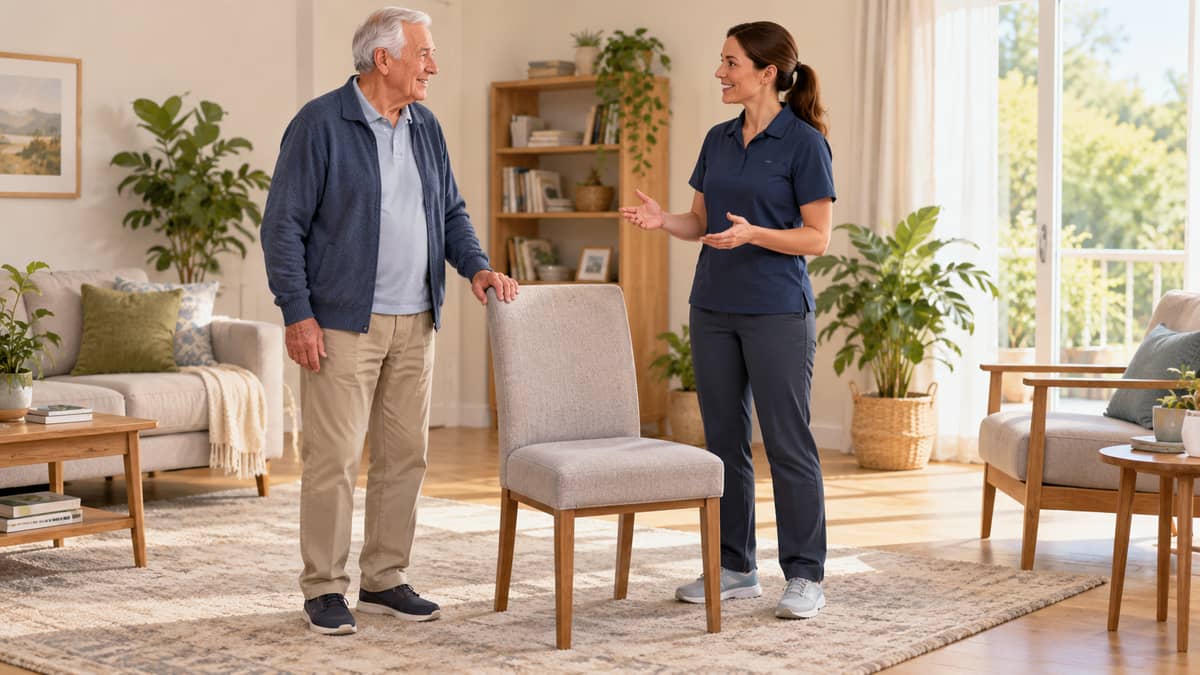
Balance exercises can help older adults improve steadiness, especially when combined with strength training and a review of fall risks. Start with movements you can control beside a stable support, rather than trying difficult poses from a video. A recent fall, dizziness or a sudden change in walking also deserves medical attention—not just more exercise.
Prepare a safe place to practise
Choose a clear, well-lit area with a fixed counter or sturdy support within reach. A chair that rolls or slides is not a dependable handhold. Wear footwear that stays securely on your feet and keep pets, loose rugs and cables out of the space.
If you need another person to remain safe while standing, have that support arranged before starting. Do not make an exercise harder by closing your eyes or standing on an unstable surface without appropriate supervision.
Stop if you feel faint, develop pain or cannot keep control of the movement.
Use supported movements with a purpose
With both hands near a stable counter, a gentle side-to-side weight shift can help you practise moving your weight over each foot. Keep both feet on the floor and avoid leaning farther than you can comfortably recover.
Supported heel raises work the calf muscles used in standing and walking. Rise only as far as you can control, then lower slowly. A sit-to-stand movement from a firm chair practises the leg strength needed for everyday transfers; use arm support if required.
These are examples, not a prescription. Your starting position, assistance and amount of practice should reflect your current ability.
Balance problems can have medical contributors
Vision changes, medication effects, painful joints and reduced sensation in the feet can affect steadiness. Light-headedness on standing is different from simply finding a narrow stance difficult.
Tell your healthcare team when symptoms happen, whether you have fallen and what you were doing at the time. Do not stop a prescribed medicine yourself because you think it contributes to dizziness.
MoveWell Med's Mobility and Balance Program considers movement alongside the medical factors that can influence it.
Make the home support the exercise
Exercise cannot remove a loose stair rail or a dark path to the bathroom. Check routes you use regularly, including steps, entryways and places where you turn while carrying items.
Keep frequently used objects within comfortable reach. Use a prescribed mobility aid as instructed rather than leaving it behind because a trip seems short. If a task repeatedly feels unsafe, that task is worth discussing during an assessment.
The goal is useful confidence in daily movement, not passing a balance challenge once.
Connecting movement and health at MoveWell Med
MoveWell Med offers physician-led programs that connect mobility goals with broader health priorities. The Longevity Program may also be relevant when maintaining strength and independence is part of your longer-term plan.
Bring details of falls, near-falls, symptoms and the activities you want to do more comfortably. Hands-on rehabilitation needs can then be discussed alongside medical follow-up.
Frequently asked questions
Should I practise standing on one leg first?
Not if it feels unsafe. Supported, simpler movements may be a better starting point.
Can exercise prevent every fall?
No. Environmental hazards and medical factors also need attention.
What if I feel dizzy when standing?
Stop the activity and discuss the symptom with your healthcare team before progressing.
Do I need to change my walking aid?
Have its fit and use assessed rather than changing or abandoning it yourself.
Ask about a mobility assessment
Call 604-698-6683 or contact MoveWell Med to discuss your balance and mobility goals.